Skincare Tips
Skin Barrier Repair: How Tallow Fixes What Serums Can't
Tight skin after washing. Random redness. Products that used to work now sting. If any of this sounds familiar, you're not dealing with "bad skin" — you're dealing with a damaged skin barrier. And the fix isn't another serum. It's understanding what your barrier actually needs. Let's talk about skin barrier repair, what went wrong, and why tallow might be the most effective (and simplest) solution you haven't tried yet.
What Is Your Skin Barrier and Why Does It Break Down?
Your skin barrier — also called the acid mantle or stratum corneum — is the outermost layer of your skin. Think of it as a brick wall: skin cells are the bricks, and lipids (fats) are the mortar holding everything together. When that mortar breaks down, moisture escapes, irritants get in, and your skin starts reacting to everything.
Common damaged skin barrier symptoms include:
• Tightness or dryness that won't go away no matter how much you moisturize
• Redness, stinging, or burning — especially from products you've used before
• Flakiness or rough texture
• Increased breakouts or sensitivity
• Skin that looks dull, dehydrated, or "angry"
What causes the damage? Usually a combination of over-cleansing (especially with sulfates), over-exfoliating, retinol overuse, harsh actives layered together, and — ironically — too many skincare products. The modern skincare routine is often the problem, not the solution.
Why Most "Barrier Repair" Products Don't Actually Work
The skincare industry loves the phrase "barrier repair." It's on ceramide serums, peptide creams, and $80 moisturizers. But here's the thing: most of these products are water-based formulas with synthetic lipids that mimic your skin's natural fats — poorly. They provide temporary relief, but they don't deliver the same fatty acid structure your barrier is actually made of.
Your skin barrier is built from cholesterol, ceramides, and fatty acids — particularly oleic acid, palmitic acid, and stearic acid. To truly repair it, you need to supply those exact building blocks. Not synthetic approximations. Not water with emulsifiers. Real lipids in the right ratios.
How to Fix Your Skin Barrier With Tallow
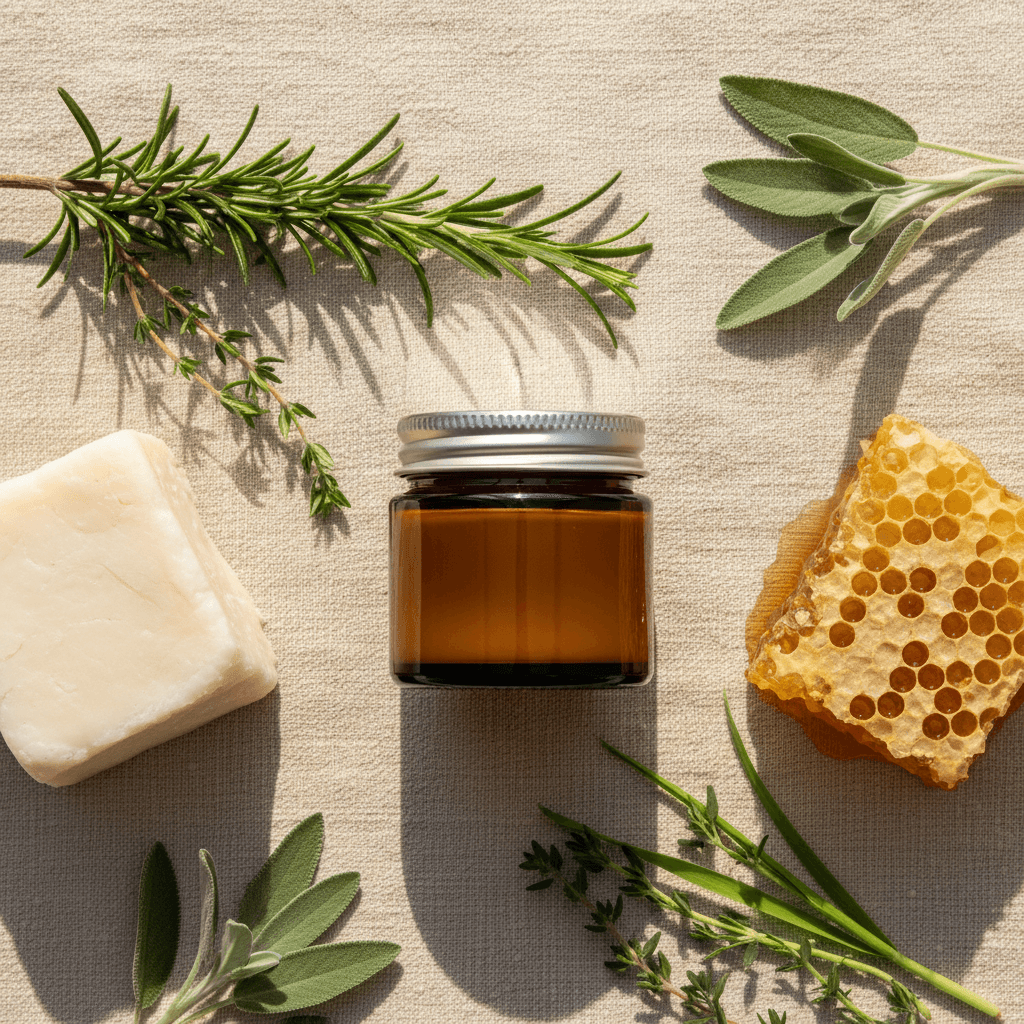
This is where tallow for skin barrier repair makes so much sense. Grass-fed beef tallow contains the same fatty acids your skin barrier is made of — in remarkably similar ratios. It's not a coincidence. Mammalian fat is mammalian fat. Your skin recognizes tallow because it's structurally identical to human sebum.
Here's how to fix your skin barrier using tallow:
Step 1: Strip back your routine. Stop the actives, exfoliants, and multi-step products. Your barrier is damaged — it needs rest, not more chemistry experiments. Cleanse with lukewarm water or a gentle, sulfate-free cleanser only.
Step 2: Apply tallow balm on damp skin. After cleansing, pat your face until slightly damp. Warm a pea-sized amount of tallow balm between your fingertips and press it into your skin. The damp surface helps the tallow absorb evenly and deeply.
Step 3: Be patient. Barrier repair isn't instant. Give it 2-4 weeks of consistent, simplified care. Most people notice reduced redness and tightness within the first week, with significant improvement by week three.
Step 4: Keep it simple long-term. Once your barrier heals, resist the urge to pile products back on. Tallow + gentle cleansing is a complete routine for most skin types. Your skin doesn't need 10 steps — it needs the right ingredients.
What Makes Tallow Better Than Ceramide Creams?
Ceramide creams aren't bad — they're just incomplete. They typically contain one or two synthetic ceramides in a water-based formula. Tallow delivers a full spectrum of skin-identical lipids, fat-soluble vitamins (A, D, E, K), and anti-inflammatory compounds like CLA — all in a single, whole-food ingredient. No emulsifiers needed. No preservatives required.
It's the difference between taking a synthetic multivitamin and eating a nutrient-dense meal. One is engineered. The other is real. Your skin knows the difference. (If you're new to tallow, check our guide on what tallow skincare is and why it works.)
The conventional skincare industry profits when your barrier stays compromised. Healthy skin doesn't need 15 products. The fewer things you put on your face, the fewer things can go wrong. Tallow respects that philosophy. (And if you want to avoid the ingredients that damage barriers in the first place, read our post on toxic ingredients hiding in skincare.)
Ready to repair, not just cover up? Shop The Tallow Studio's grass-fed tallow balms and give your skin what it's actually made of.