Wellness
Tallow for Eczema: Why It Works and How to Use It
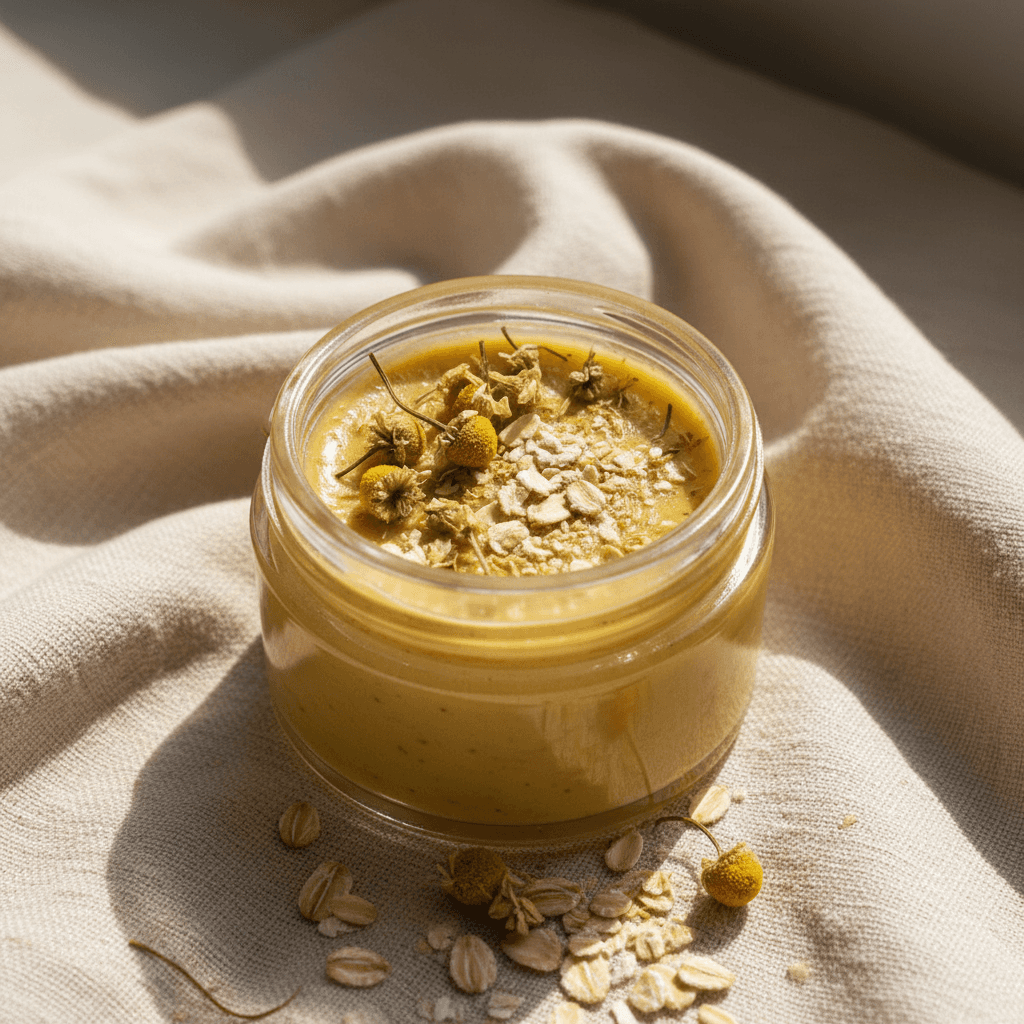
If you have eczema, you already know the drill: flare-ups that come out of nowhere, constant itching, skin that cracks and bleeds, and a medicine cabinet full of creams that either don't work or come with side effects you'd rather avoid. More and more people are turning to tallow for eczema — and the results are hard to ignore. Here's why this ancestral remedy works, what the science says, and how to use it effectively.
Why Conventional Eczema Treatments Fall Short
The standard approach to eczema management looks like this: topical corticosteroids for flare-ups, fragrance-free commercial moisturizers for maintenance, and a lot of hope. The problem? Steroids thin your skin over time and can't be used long-term. And most commercial moisturizers — even the "sensitive skin" ones — are water-based formulas packed with preservatives, emulsifiers, and ingredients that can actually trigger eczema in sensitive individuals.
Over 31 million Americans live with eczema. That's a lot of people cycling through products that manage symptoms without addressing the underlying issue: a compromised skin barrier that can't retain moisture or keep irritants out.
How Tallow Works as a Natural Eczema Treatment
Eczema is fundamentally a barrier disorder. Your skin can't hold onto moisture and can't defend against environmental triggers. Effective natural eczema treatment needs to do two things: deliver deep, lasting hydration and repair the structural integrity of your skin barrier.
Grass-fed beef tallow does both. Here's how:
Biocompatible fatty acids. Tallow is rich in oleic acid, palmitic acid, and stearic acid — the same lipids that make up your skin barrier. Unlike synthetic ceramide creams that approximate these fats, tallow delivers them in their natural form. Your skin doesn't have to convert or process anything — it just absorbs and uses them.
Anti-inflammatory compounds. Grass-fed beef tallow eczema relief comes partly from conjugated linoleic acid (CLA) and palmitoleic acid, both of which have demonstrated anti-inflammatory effects. A 2024 scoping review in the Journal of Cosmetic Dermatology confirmed tallow's moisturizing properties and noted its potential benefits for inflammatory skin conditions.
Fat-soluble vitamins. Vitamins A, D, E, and K in grass-fed tallow support cell turnover, reduce oxidative stress, and promote healing — all critical for eczema-damaged skin. Vitamin D alone has been shown in multiple studies to improve eczema severity when applied topically.
No triggering additives. This might be the biggest advantage. Tallow balm in its simplest form is literally one ingredient. No fragrances, no preservatives, no emulsifiers, no petroleum derivatives — nothing that commonly triggers eczema flares. For people whose skin reacts to everything, this matters enormously.
How to Use Tallow Balm for Eczema
Using tallow as an eczema moisturizer is straightforward, but a few tips will help you get the most out of it:
Apply on damp skin. After a lukewarm shower or bath (hot water worsens eczema), pat your skin until slightly damp. Then apply tallow balm immediately. This traps moisture beneath the tallow's lipid barrier and keeps skin hydrated far longer than lotion.
Use it generously on flare-ups. For active eczema patches, apply a thick layer of tallow balm and let it soak in. Some people cover the area with a cotton bandage overnight for maximum absorption — a technique called "wet wrapping" adapted for tallow.
Apply 2-3 times daily. Unlike water-based moisturizers that evaporate quickly, tallow holds up well. But during active flares, more frequent application speeds up relief.
Patch test first. While tallow is well-tolerated by most skin types, everyone is different. Apply a small amount to your inner forearm and wait 24 hours before using it on larger areas.
Choosing the Right Tallow Balm for Eczema-Prone Skin
Not all tallow products are equal. For eczema, look for:
100% grass-fed sourcing. Grass-fed tallow has higher levels of CLA, omega-3s, and fat-soluble vitamins compared to conventional grain-fed sources. The nutrient difference is significant.
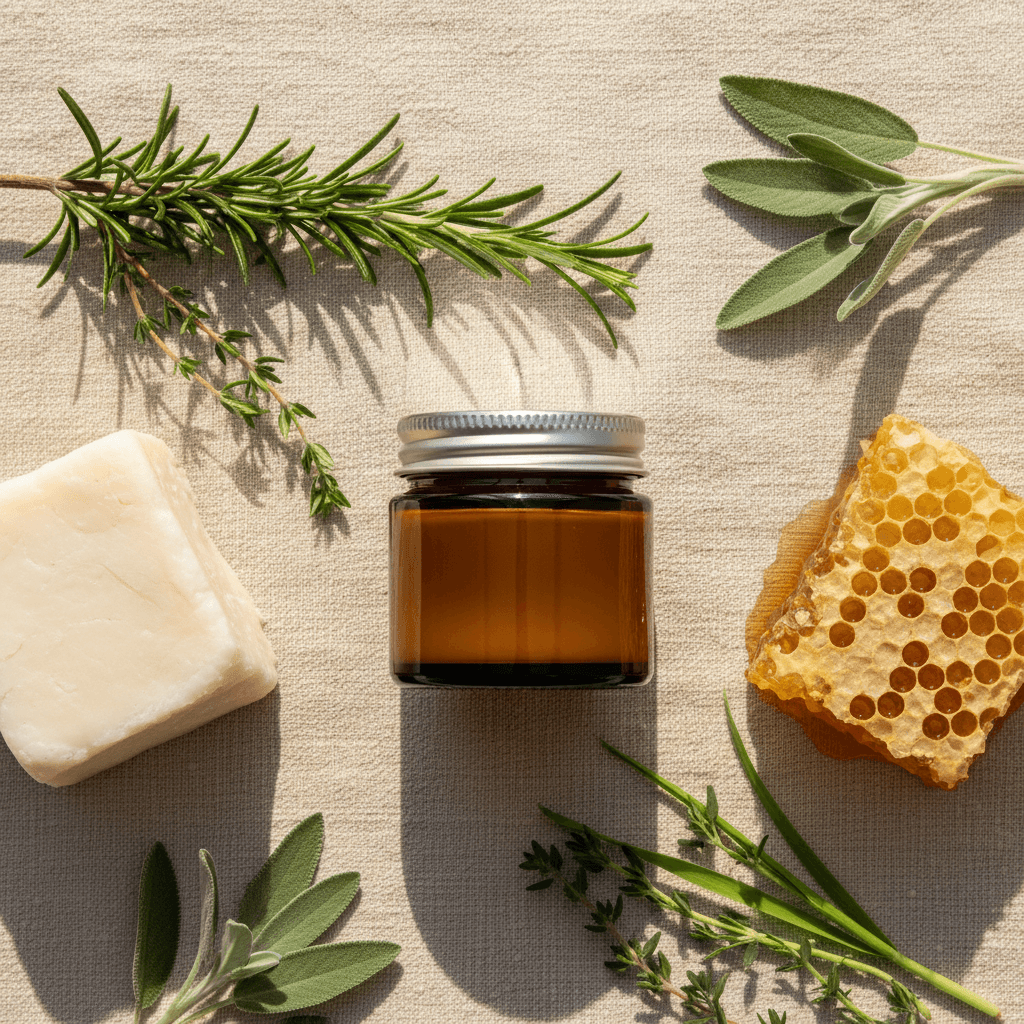
Minimal added ingredients. If you're using tallow for eczema, simpler is better. Tallow + one or two gentle botanicals is ideal. Avoid products with essential oils that might irritate (like peppermint or cinnamon).
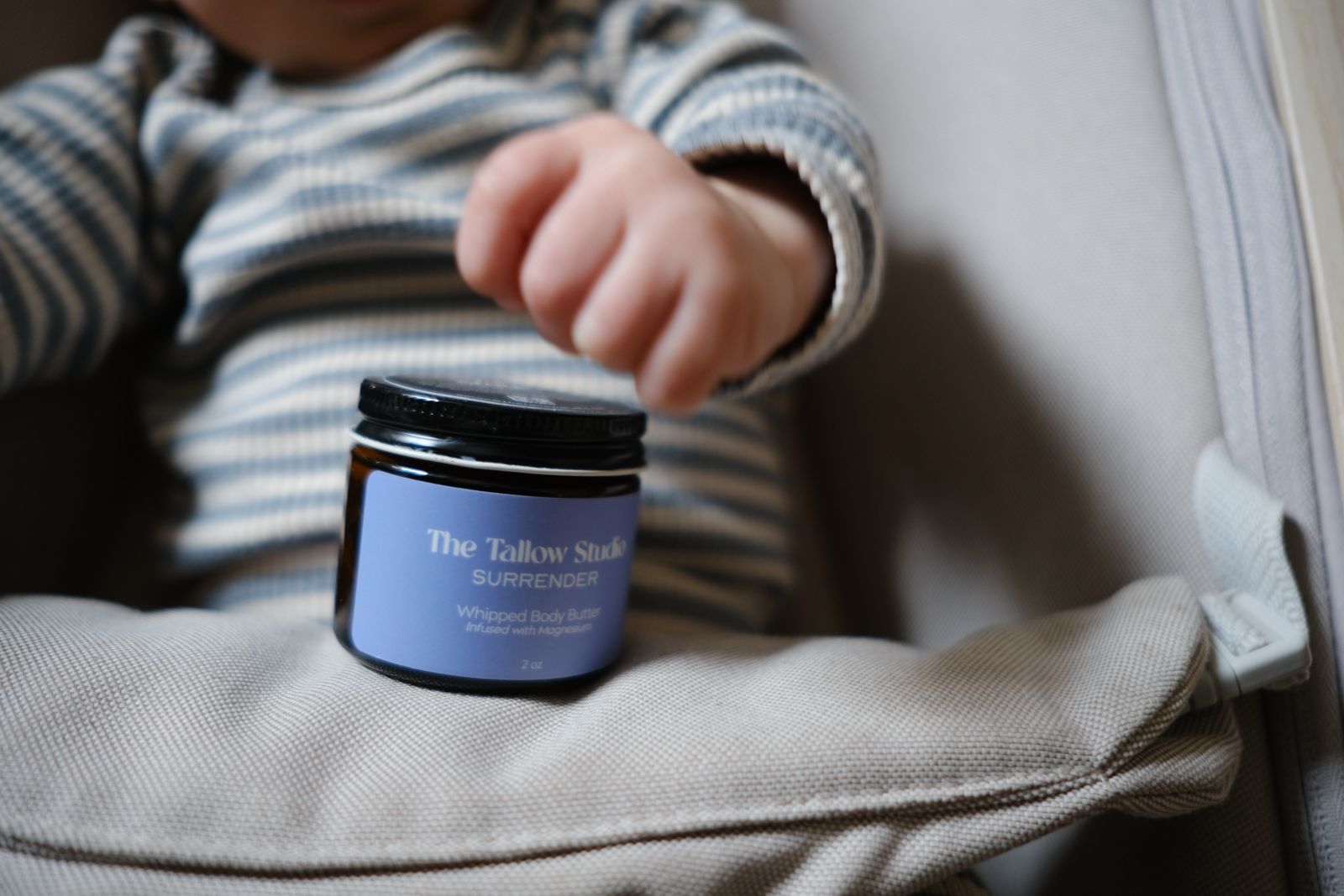
Small-batch quality. Mass-produced tallow products may use lower-quality fat or add fillers. Small-batch producers like The Tallow Studio maintain strict quality control from sourcing through rendering. (Learn more about what tallow is and how it works on skin.)
Eczema doesn't have a cure — but it does have better management than what most people settle for. If your skin barrier is broken, feed it the fats it's made of. Tallow has been doing this for thousands of years. The research is catching up, and the results speak for themselves. (For a deeper dive into barrier repair, read our guide on how tallow fixes your skin barrier.)
Ready to try a different approach? Shop The Tallow Studio's grass-fed tallow balms — crafted for sensitive, reactive skin that deserves better.